
DRY AMD TREATMENT
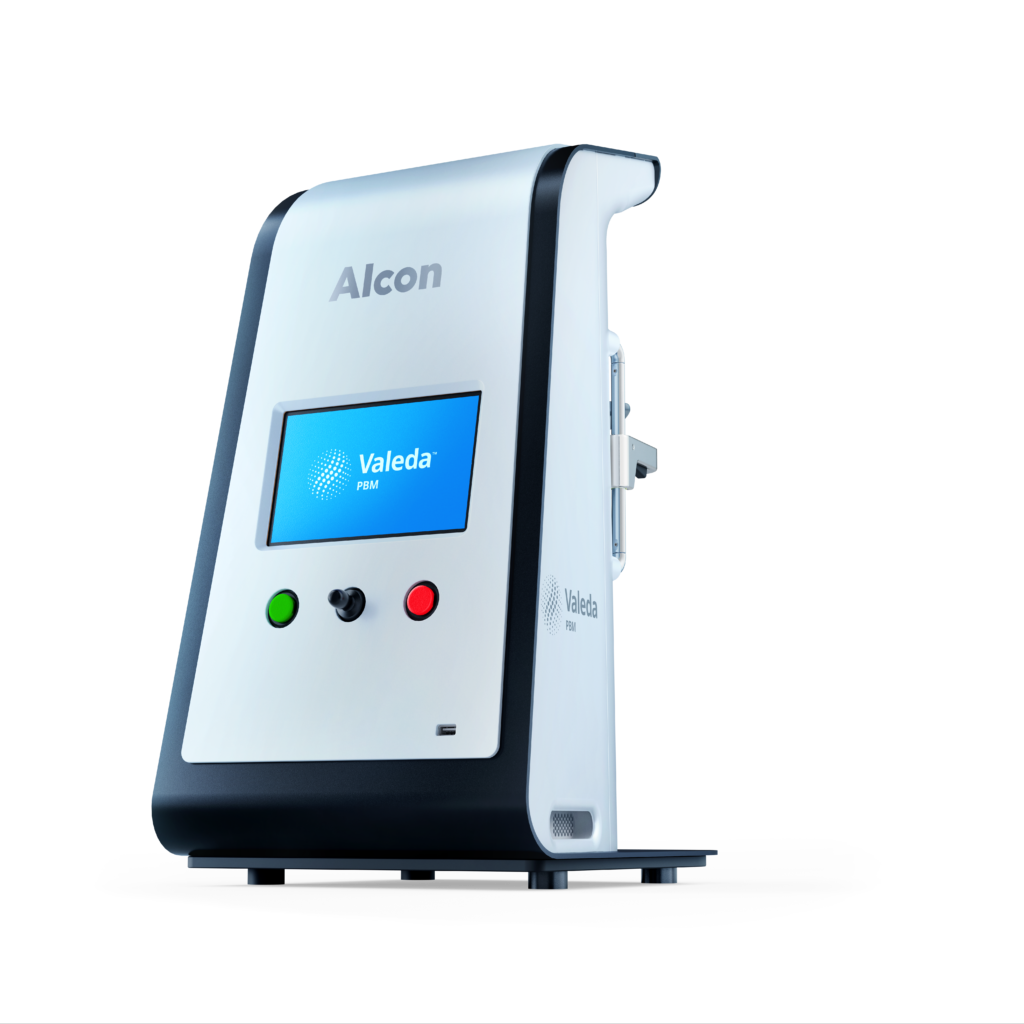
Valeda™ Photobiomodulation for Dry Age-Related Macular Degeneration
FDA-authorized light therapy designed to improve vision in qualifying adults with certain forms of dry AMD.
Valeda is a noninvasive, in-office treatment. It does not involve injections or surgery, and it is not a treatment for wet AMD.
UNDERSTANDING DRY AMD
What dry macular degeneration can change
Dry age-related macular degeneration affects the macula—the part of the retina responsible for detailed central vision. It can make everyday activities such as reading, driving, and recognizing faces more difficult.
Common symptoms
- Blurry or reduced central vision
- Straight lines that appear wavy or distorted
- Difficulty reading or seeing fine detail
- Trouble seeing in dim light
- Colors that appear less vivid
Why regular monitoring matters
Dry AMD can change gradually, and some eyes can develop wet AMD. Ongoing dilated examinations and retinal imaging help your doctor monitor progression and recommend the right combination of treatment, nutrition, and home monitoring.
Call promptly for new distortion, a dark spot, or a sudden change in central vision.
HOW VALEDA WORKS
A light-based, noninvasive treatment
Valeda uses photobiomodulation (PBM), delivering controlled amber, red, and near-infrared light to the eye. The treatment is designed to support retinal cellular activity and improve visual function in appropriately selected patients.
No injection, incision, anesthesia, or dilation is required for the Valeda treatment itself. The FDA notes that the precise biological mechanism behind the observed vision improvement is still being studied.
Important distinction
Valeda is authorized for certain forms of dry AMD. It is not authorized to treat wet AMD, and it does not replace regular retinal monitoring.
CANDIDACY
Who may qualify for Valeda treatment?
A retinal examination and imaging are required. FDA-authorized use includes patients whose best-corrected vision and retinal findings fall within specific ranges.
Your retina may show
- At least three medium drusen
- One or more large drusen
- Non-central geographic atrophy
Your evaluation must also confirm
- Best-corrected vision generally between 20/32 and 20/70
- No wet or neovascular AMD in the treated eye
- No geographic atrophy involving the center of the macula
Tell us before treatment
Let your doctor know about light sensitivity, migraines or seizures triggered by light, pregnancy or nursing, and any medication or topical product that may increase light sensitivity. These factors may affect whether treatment is appropriate.
WHAT TO EXPECT
A Valeda treatment series, step by step
1. Retinal evaluation
Your physician confirms the type and stage of AMD, checks your vision, and reviews retinal imaging and medical history.
2. Short office visits
You rest your chin and forehead at the device while following instructions to keep each eye open or closed. Light delivery takes about four minutes per eye.
3. Nine-treatment series
One series includes three treatments per week for nine treatments total, completed over approximately three to five weeks.
Ongoing courses
In the pivotal clinical study, nine-treatment series were repeated approximately every four months for two years. Your physician will recommend an individualized schedule based on your retinal findings and response.
RESULTS AND EVIDENCE
What the clinical evidence showed
Vision outcome
In the FDA-reviewed pivotal study, Valeda-treated eyes had an average improvement of approximately one line of vision at about two years compared with eyes that did not receive active treatment.
Manufacturer-reported analyses found that 84% of treated patients improved or maintained vision from baseline at approximately two years. Individual results vary.
What Valeda does not promise
Valeda is not a cure for dry AMD, does not restore all vision, and has not been shown to eliminate the need for glasses, supplements, or ongoing monitoring. The duration of benefit beyond two years is not yet established.
FREQUENTLY ASKED QUESTIONS
Questions about Valeda
Does treatment hurt?
Valeda is noninvasive and most study participants did not report eye pain. Some people may notice brief warmth, an afterimage, or a mild headache.
Will I still need AREDS2 or eye exams?
Yes. Valeda does not replace routine AMD care. Continue supplements, Amsler-grid monitoring, and follow-up examinations exactly as your physician recommends.
Can Valeda treat wet AMD?
No. Valeda is not authorized to treat wet or neovascular AMD. Wet AMD requires a different evaluation and treatment plan.
How will I know if I qualify?
Eligibility depends on your vision, drusen or geographic-atrophy pattern, imaging, and medical history. A comprehensive retinal evaluation is the only way to determine candidacy.
NEXT STEP
Find out whether Valeda may be appropriate for your dry AMD.
Schedule a comprehensive retinal evaluation with The Eye Centers in Northeast Ohio.