
EYELID SURGERY
Upper Eyelid Blepharoplasty
Remove excess upper-eyelid skin to improve eyelid contour, peripheral vision, or both.
At The Eye Centers, blepharoplasty planning begins with a detailed evaluation of the eyelids, brows, ocular surface, visual field, and your personal goals.
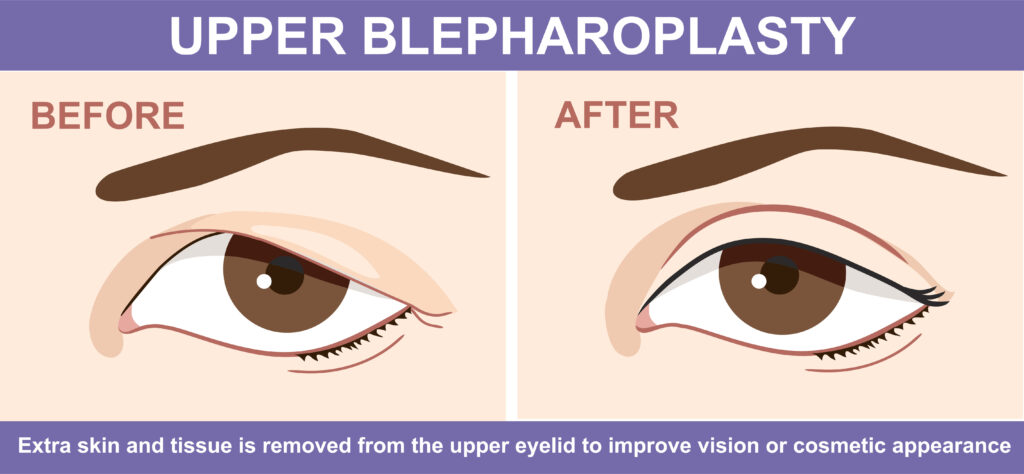
WHAT IS BLEPHAROPLASTY?
Surgery for excess eyelid skin—not every type of drooping
Upper eyelid blepharoplasty removes carefully measured excess skin and, when appropriate, a small amount of muscle or fat. The incision is placed in the natural eyelid crease to help camouflage the scar.
Functional blepharoplasty
When excess skin blocks the upper or side vision, surgery may improve the visual field and reduce eyelid heaviness.
Cosmetic blepharoplasty
When vision is not affected, surgery may create a smoother, more open eyelid contour and a refreshed appearance.
Ptosis is different
If the eyelid margin itself sits too low, muscle or tendon repair may be needed instead of—or in addition to—skin removal.
YOUR EVALUATION
What we examine before recommending surgery
- Amount and distribution of excess upper-eyelid skin
- Position of the eyelid margin and eyebrows
- Natural eyelid crease and facial symmetry
- Dry-eye symptoms and ocular-surface health
- Prior eyelid or eye surgery and medical history
- Visual-field testing and photographs when functional impairment is suspected
Dry eye, thyroid eye disease, brow droop, eyelid laxity, and true ptosis may change the surgical plan or need treatment first.
WHAT TO EXPECT
Your blepharoplasty journey
1. Personalized planning
Your surgeon marks the skin conservatively and reviews whether the goal is functional, cosmetic, or both.
2. Outpatient surgery
Excess tissue is removed through an incision in the upper-eyelid crease. Anesthesia and sedation are tailored to the procedure and patient.
3. Early healing
Bruising and swelling are expected. Cold compresses, head elevation, ointment, and activity restrictions may be recommended.
4. Gradual refinement
Most visible bruising improves over one to two weeks, while mild swelling and scar maturation continue for weeks to months.
RECOVERY
Plan for healing—not an instant final result
First several days
- Use cold compresses and keep your head elevated as directed.
- Expect tightness, swelling, bruising, and temporary blur from ointment.
- Avoid strenuous activity, heavy lifting, deep bending, and rubbing the eyelids.
Following weeks
- Sutures are removed or dissolve according to the surgical plan.
- Makeup, contact lenses, exercise, and work restrictions are resumed only when cleared.
- Protect healing scars from direct sun exposure.
Final result
Eyelid contour continues to settle as swelling resolves. Scars generally soften and fade over several months, but every person heals differently.
RISKS AND LIMITATIONS
What surgery cannot guarantee
Blepharoplasty can improve excess skin and eyelid contour, but it does not stop aging, correct every facial asymmetry, or automatically lift a low brow or eyelid margin.
- Dryness, irritation, or difficulty closing the eyes
- Bleeding, infection, or delayed healing
- Visible or asymmetric scarring
- Temporary or persistent eyelid asymmetry
- Too much or too little skin removal
- Need for additional treatment or revision
- Rare vision-threatening complications
Medication safety
Tell your surgeon about aspirin, anti-inflammatory medication, anticoagulants, vitamins, and supplements. Never stop a prescribed medication unless the prescribing clinician and surgeon agree it is safe.
FREQUENTLY ASKED QUESTIONS
Questions about upper-eyelid blepharoplasty
Will insurance cover surgery?
Coverage may be available when excess skin causes documented visual-field impairment and the plan’s criteria are met. Cosmetic surgery is generally self-pay. Coverage is never guaranteed.
Will the scar be visible?
The incision is placed in the natural upper-eyelid crease. It is visible early in healing and typically becomes less noticeable as it matures.
Can blepharoplasty and ptosis repair be combined?
Yes, when both excess skin and a low eyelid margin are present. Your examination determines whether one or both procedures are appropriate.
Will I look different?
The goal is a more open, rested eyelid contour while preserving your natural features. Exact symmetry and a specific cosmetic result cannot be guaranteed.
NEXT STEP
Schedule an eyelid evaluation
Learn whether excess skin, ptosis, brow position, or a combination is contributing to your concern.
Individual results and recovery vary. A comprehensive examination is required to determine candidacy and discuss risks, benefits, and alternatives.