
PERSONALIZED CATARACT TECHNOLOGY
Light Adjustable Lens (LAL) for Cataract Surgery
The only FDA-approved intraocular lens whose power can be adjusted after cataract surgery.
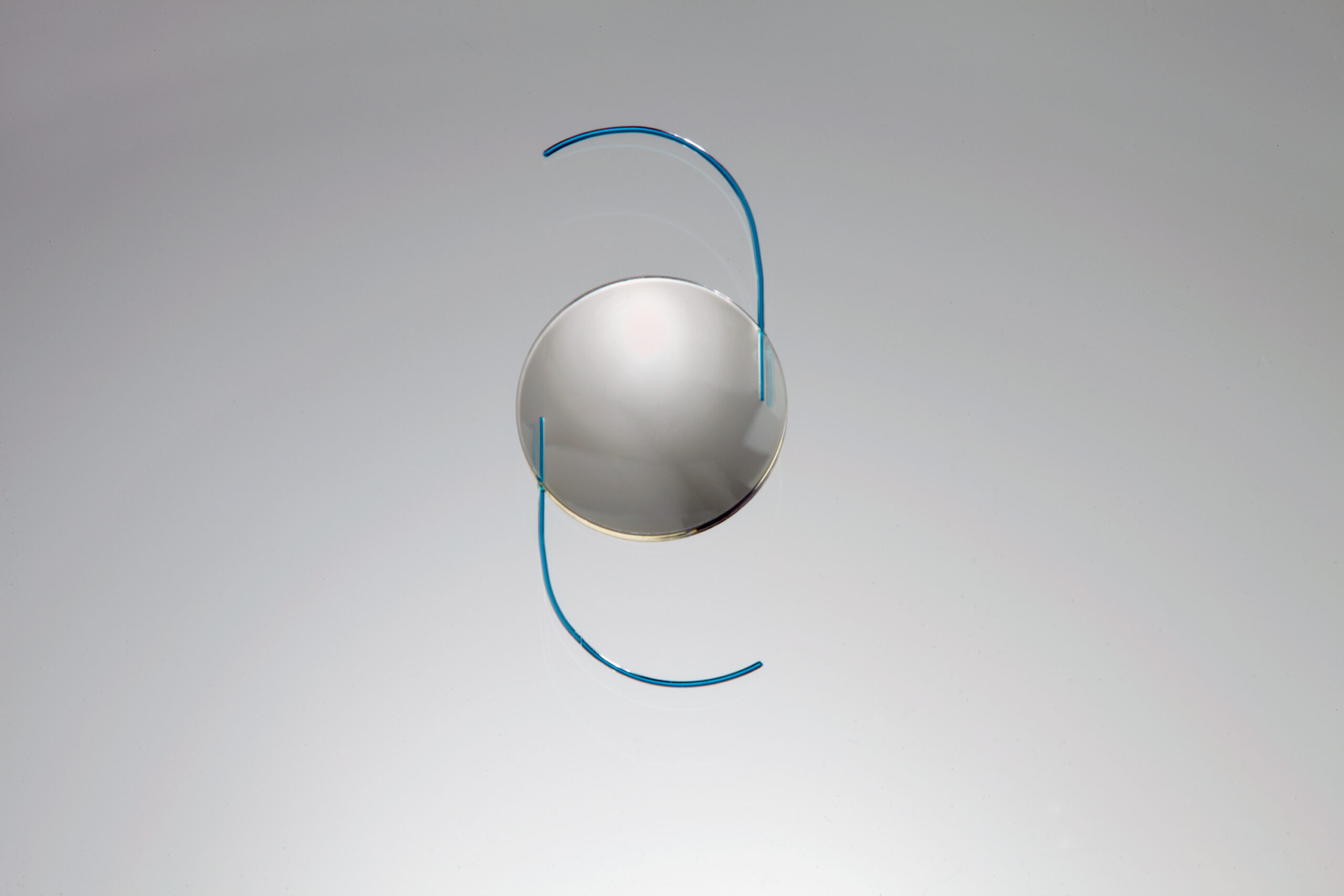
The LAL allows your surgeon to fine-tune your prescription after your eye heals, based on your postoperative vision and lifestyle goals.
WHY ADJUST AFTER SURGERY?
A prescription based on how your eye actually heals
Traditional intraocular lenses have a fixed power selected before cataract surgery. The Light Adjustable Lens is made from a photosensitive material that can be adjusted in the office after surgery, then permanently locked once you and your surgeon are satisfied with the target.
The surgery
Cataract removal and placement of the LAL are performed in the same general way as surgery with a standard intraocular lens.
The difference
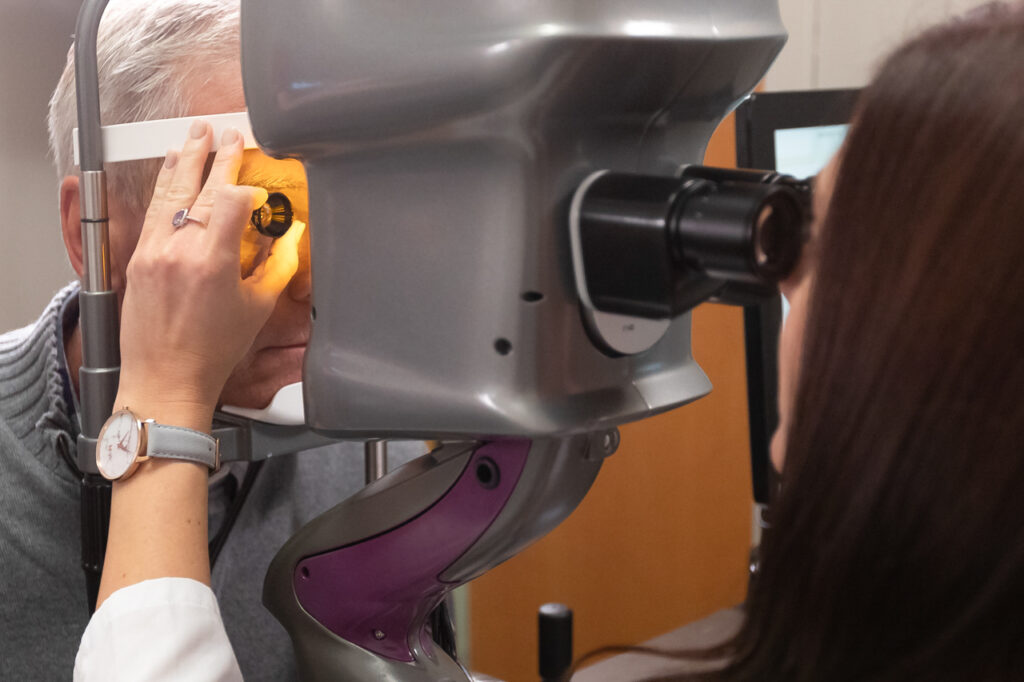
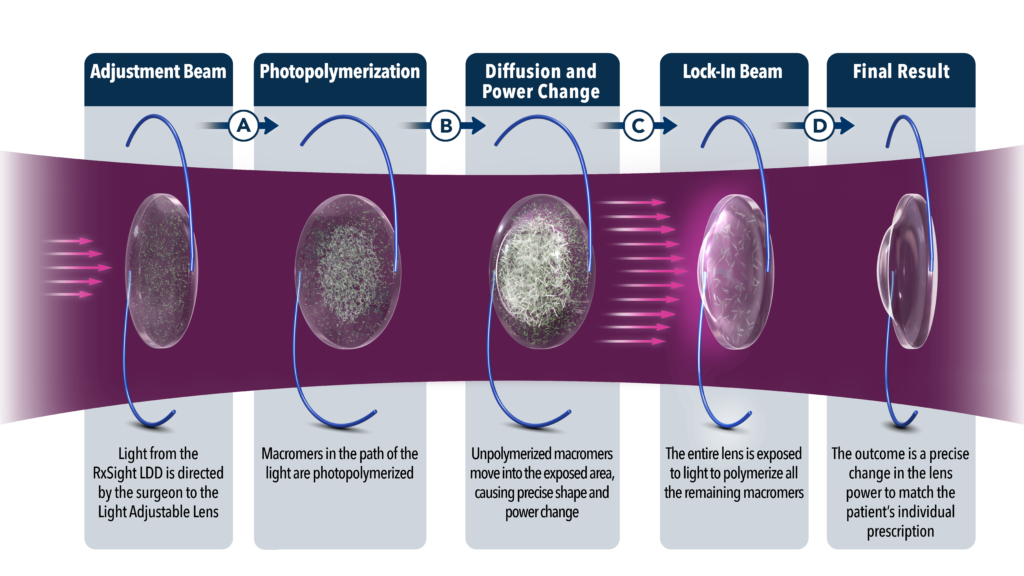
After the eye heals, the RxSight Light Delivery Device uses controlled ultraviolet light to adjust the lens power and address residual prescription, including astigmatism.
YOUR LAL JOURNEY
From cataract surgery to final lock-in
1. Cataract surgery
Your cataract is removed and the Light Adjustable Lens is implanted.
2. Healing period
Your eye heals for approximately four weeks. You wear the supplied RxSight UV-protective glasses during all waking hours.
3. Adjustments
You receive one to three light-adjustment treatments based on your measurements and vision goals. Each treatment averages about 90 seconds.
4. Final lock-in
Two final light treatments permanently lock the lens prescription. Continue the UV-protective glasses until 24 hours after the last treatment.
AN ESSENTIAL PART OF RECOVERY
UV-protective glasses are required
Because the LAL remains sensitive to ultraviolet light until it is locked, you must wear the RxSight UV-protective glasses during all waking hours from surgery until 24 hours after your final lock-in treatment. At The Eye Centers, light treatments generally begin about four weeks after surgery on the second eye, and the adjustment and lock-in visits occur afterward. This means the glasses are usually required longer than four to five weeks. Your team will provide your exact timeline.
Unprotected UV exposure can cause an unintended change in the lens prescription and may reduce vision quality. The glasses are not optional, and regular sunglasses are not a substitute unless your surgical team specifically directs you otherwise.
Tell your surgeon immediately if the glasses are lost, damaged, or not worn as instructed.
POTENTIAL BENEFITS
Why patients consider the Light Adjustable Lens
Postoperative customization
Fine-tune the lens after healing instead of relying only on measurements and predictions made before surgery.
Lifestyle-based targets
Experience your vision and discuss whether distance, intermediate, or near tasks should shape the final prescription.
Residual astigmatism correction
The adjustment process can address qualifying residual astigmatism after the eye has healed.
Strong clinical results
In the FDA clinical study, LAL patients were almost twice as likely to achieve 20/20 or better without glasses compared with patients receiving a standard monofocal lens. Results vary.
CANDIDACY
Who may be a candidate?
FDA-approved use includes adults having cataract surgery who have at least 0.75 diopters of preexisting corneal astigmatism and do not have preexisting macular disease.
- Able to attend all adjustment and lock-in appointments
- Able to wear the supplied UV-protective glasses exactly as directed
- Interested in refining vision after experiencing the initial postoperative result
- Healthy enough for cataract surgery after a complete eye examination
A consultation is required. Your surgeon will consider your retina, cornea, pupil, medications, prior eye surgery, lifestyle, and visual goals.
The LAL may not be appropriate if you:
- Take medications that increase UV sensitivity or may harm the retina
- Have uncontrolled eye movements such as nystagmus
- Cannot complete the light-treatment schedule or follow the UV-glasses instructions
- Have certain retinal, corneal, or other eye conditions
Your surgeon will review the full list of risks, warnings, and alternatives with you.
HOW THE TECHNOLOGY WORKS
Light treatments reshape the lens power
The Light Delivery Device directs a precise UV-light pattern onto the photosensitive lens. This changes the lens curvature and prescription. Once your desired vision is reached, two required lock-in treatments prevent further adjustment.
FREQUENTLY ASKED QUESTIONS
Questions about the Light Adjustable Lens
Will I be completely glasses-free?
Not necessarily. The LAL can improve the precision of the final prescription, but no lens can guarantee freedom from glasses for every distance or task.
How many light-treatment visits are needed?
Most patients receive one to three adjustment treatments followed by two required lock-in treatments, in addition to routine postoperative examinations.
What will I notice after a light treatment?
Temporary blur from the treatment gel or dilation is common. Some patients notice a temporary pink or red afterimage. Your team will review what is expected and when to call.
Are there risks?
The LAL involves the usual risks of cataract surgery plus risks related to UV-light treatment and unintended lens changes if the protective-glasses instructions are not followed. Your surgeon will discuss these in detail.
VIDEOS AND RESOURCES
See how the Light Adjustable Lens works
How the LAL works
What to expect
Fixed vs. adjustable lenses
NEXT STEP
Is the Light Adjustable Lens right for your cataract surgery?
Meet with a cataract surgeon at The Eye Centers to review your measurements, eye health, lifestyle, and vision goals.
Individual results vary. This information is educational and does not replace a comprehensive examination or discussion of risks, benefits, and alternatives with your surgeon.